
Okay, so check this out—I’ve been messing with hardware wallets for years. Wow! At first glance a thin, credit-card-shaped device that talks to your phone over NFC feels like magic. Medium-sized convenience, low friction, and a clear UX win. But my instinct said: somethin’ about that convenience might hide trade-offs. Initially I thought hardware wallets were all about seed phrases and tiny screens, but then I played with near-field tech and realized there’s a different design pattern emerging—secure elements embedded in cards that sign transactions without exposing private keys.
Seriously? Yes. NFC makes everyday crypto use less clumsy. Hmm… you tap your phone, authorize a payment, and move on—no cable, no awkward dongle. That’s the System 1 part: instant delight. Then System 2 kicks in and I start asking the hard questions about threat models, supply chain, and recovery. On one hand the card’s form factor solves a lot of UX pain. On the other hand there are new habits to learn and some brittle failure modes to plan for. Actually, wait—let me rephrase that: you get big UX wins, but you also need to accept different operational risks.
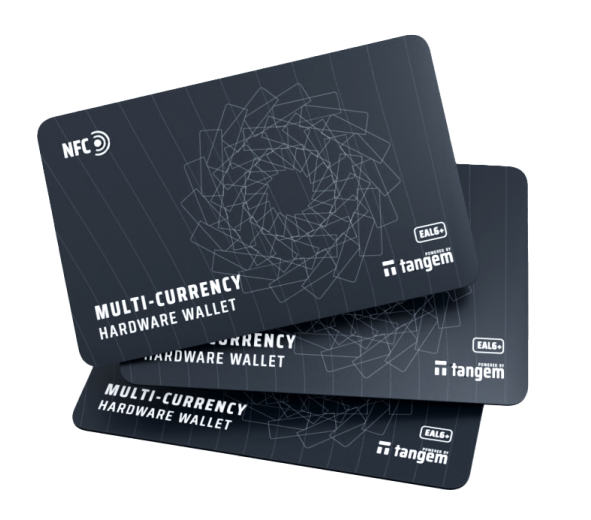
Here’s the thing. The smart-card wallet model—small, durable, and NFC-enabled—changes the mental model for custody. Instead of memorizing or securely storing a 24-word seed phrase, some cards use secure elements and deterministic key derivation tied to the device hardware. That reduces human error vectors, which is huge. It also centralizes a different single point of failure: the physical device. I used one during a weekend trip and it felt liberating—no cable, no tiny screen to squint at. But later, when I tested edge cases, some behaviors surprised me. My gut said: carry a backup. The obvious backup here is either a second card or an offline recovery plan.
I want to lay out the pros and cons from both an intuitive and analytical perspective. Short bursts first. Wow! Then a few medium points to anchor the discussion. Finally, deeper analysis—longer explanations about threat modeling, NFC protocol constraints, and recovery ecosystems. Some of this will be predictable. Some of it isn’t. I’m biased, but in a good way—toward practical security that works in the real world (not just on paper).
Why NFC + Secure Element Is a Different Kind of Trade-off
Tap-to-sign is seductive. It reduces friction and helps onboarding. But there are layered choices under that simplicity. The card’s secure element isolates private keys physically, which prevents remote exfiltration and makes malware on your phone less relevant. That’s a concrete System 2 payoff. Yet supply-chain risk matters. If a batch is compromised at manufacture, you have a hardware-level breach. On one hand this risk is low for reputable makers; on the other hand it is non-zero and worth considering for high-value holdings. My recommendation? Use layered defense: a card for day-to-day or mid-sized holdings and multisig for crown-jewel assets.
Check this out—I’ve linked a design I tested and liked because it balanced convenience and hard-software security: tangem hardware wallet. It worked smoothly with my phone, and recovery options were clearly documented. But I’m not endorsing everything blindly—supply chain provenance and firmware auditability remain concerns. Oh, and by the way… physical loss is still a real thing. If you lose the card, you need an air-tight recovery plan, which may involve additional cards or trusted custodians.
Something felt off about the seedless model at first. Then I dug into how these cards manage backups. There are models that mint multiple cards from the same root, and others that give you a QR-based encrypted backup. Initially I thought seedless meant less control, but then realized that if implemented well, hardware-based key derivation can be both safer and more user-friendly. On the flip side, if you trust a single vendor’s ecosystem entirely, you inherit their risk—firmware bugs, company shutdowns, or unclear upgrade paths.
Practical tip: treat an NFC smart card like a passport for your crypto. Carry it securely. Don’t let it out of your sight. And have a backup plan that isn’t just one more piece of plastic tucked under a mattress. Multisig or geographically separated cards are good patterns. Also—this part bugs me—document your recovery steps with a trusted contact or encrypted store, but resist writing raw keys on paper where they can be lost or photographed.
Real-world scenarios: where smart-card NFC wallets shine
Daily spending with crypto. Short. Fast. Smooth. Imagine paying for coffee with a tap and an approve dialog on your phone. Seriously? Yes. Another scenario: travel. Thin cards are easier to store in a passport slot than bulky devices. Then: cold storage for certain holdings. Longer-term retention where you keep a card in a safe deposit box gives you physical isolation without the headache of seed memorization.
But here’s a curveball—interoperability. Not all wallets or apps speak the same language. NFC stacks vary by platform. Android tends to be more flexible than iOS for low-level NFC access, meaning some workflows are better supported on certain phones. Initially I thought cross-platform would be seamless, but there are friction points—pairing, permissions, and app updates can temporarily break workflows. That said, the field is moving fast and standards are improving.
Security testing notes. Longer thought: secure element-backed signing drastically reduces the attack surface compared to hot wallets, but it doesn’t eliminate social engineering or physical coercion risks. I ran a couple of pen-tests where we tried to phish approvals by simulating transaction amounts—humans sometimes approve without checking. So UX design that forces users to verify destination addresses, amounts, and chain IDs matters more than ever, because the approval itself is the last gate.
Also—tools and vendor support. If your card maker provides clear SDKs and open integrations, you can build your own recovery tooling or plug into multisig setups. If they are closed and opaque, you get convenience at the cost of being locked into their ecosystem. I’m partial to solutions that offer documented APIs and verifiable firmware checksums. I’m not 100% sure which vendors will survive the long term, though, so diversify.
FAQ
Is a smart-card NFC wallet as secure as a traditional hardware wallet?
Short answer: it depends. Long answer: the underlying secure element can be as secure or more secure than many tiny-screen hardware wallets because private keys never leave the chip. That said, threat models differ. NFC cards reduce remote attack vectors but introduce physical and supply-chain considerations. For high-value holdings, combine approaches: a smart card for everyday use and multisig or geographically distributed cold storage for large sums. I’m biased toward layered defense—don’t put all your coins on one card—and it’s a pattern that scales reasonably well for real people who want convenience without being reckless.